
Ever stood in the grocery aisle, stared at a tiny table of numbers, and wondered, “What on earth does this mean for my waistline?” If you’ve ever asked yourself how to read nutrition labels, you’re not alone. By the end of this guide you’ll be able to slice through the jargon, pick the foods that fuel your goals, and avoid the sneaky traps that keep you stuck.
In This Article
- What You’ll Need Before You Start
- Step 1: Locate the Serving Size
- Step 2: Decode the Calories and Energy
- Step 3: Break Down the Macronutrients
- Step 4: Inspect the Micronutrients & %DV
- Step 5: Scan the Ingredient List for Hidden Sugars & Additives
- Step 6: Look for Front‑Pack Claims and What They Really Mean
- Common Mistakes to Avoid
- Troubleshooting & Tips for Best Results
- Summary & Next Steps
What You’ll Need Before You Start
- A fresh grocery receipt or a smartphone with the MyFitnessPal app installed (free version works fine).
- A pen and a small notebook – I keep a “Label Log” in my kitchen drawer and it only costs $0.99 at Office Depot.
- A basic understanding of serving sizes – most packages list them in grams, ounces, or “cups.”
- Patience. The first few labels can feel like a cryptic code, but after about five products you’ll spot patterns.
- Optional: a digital kitchen scale (e.g., Ozeri ZK14, $19.99) for precise portion control.

Step 1: Locate the Serving Size
The serving size is the foundation of every number that follows. It tells you the amount of food the manufacturer used to calculate calories, fats, carbs, and proteins. If the package says “Serving Size: 2 cookies (28 g),” all the values on the label refer to those two cookies—not the whole bag.
In my experience, people often eat the entire bag without adjusting the numbers. A quick mental trick: imagine the serving size as a “baseline” and multiply or divide as needed. For instance, a 300‑calorie bag of chips might contain three servings; eating the whole bag means you’ve consumed 900 calories.
Tip: Use a kitchen scale to verify the listed weight. If the label says 28 g but the bag feels heavier, you’ve probably got a mismatch that can add up over weeks.
Step 2: Decode the Calories and Energy
Calories are the most direct indicator of how much energy a food will provide. Look at the “Calories” line right under the serving size. This number includes both the calories from macronutrients and any alcohol (if present).
For weight‑loss planning, I like to keep my daily intake within a 500‑calorie deficit of my maintenance level. If your maintenance is 2,400 cal, aim for about 1,900 cal. That means a snack listed as 250 cal should be counted as a single serving, not two.
Beware of “calorie‑dense” foods – those with over 200 cal per 30 g (e.g., Nutella, 540 cal per 100 g). Even a small portion can blow your budget and your waistline.
Step 3: Break Down the Macronutrients
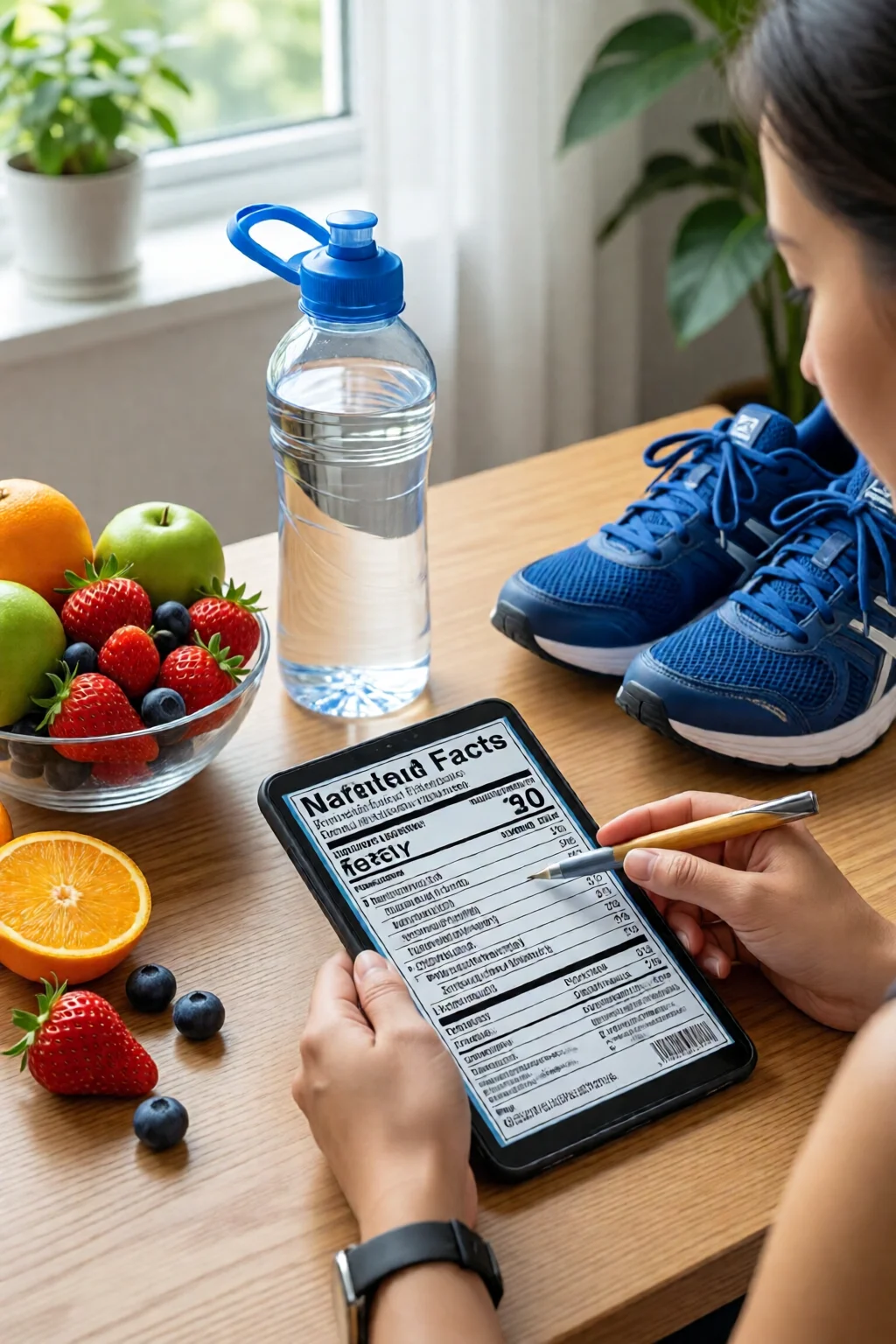
Under the calorie count you’ll find fat, carbohydrate, and protein totals. Here’s how to interpret them:
- Total Fat – Includes saturated, trans, and sometimes “polyunsaturated” or “monounsaturated.” Aim for ≤ 10 % of total calories from saturated fat (roughly 22 g on a 2,000‑cal diet). If a label shows 8 g saturated fat per serving, that’s already 36 % of your daily limit.
- Carbohydrates – Total carbs include sugars, fiber, and “sugar alcohols.” For a low‑carb approach, keep net carbs (total carbs minus fiber) below 30 g per day. A granola bar with 23 g total carbs and 5 g fiber has 18 g net carbs.
- Protein – A good protein source provides at least 10 % of calories from protein. On a 2,000‑cal diet that’s 50 g. If a Greek yogurt lists 15 g protein per 150‑g serving, you’re getting 30 % of your daily target in one cup.
One mistake I see often: ignoring the “added sugars” line. The FDA now requires it, and it’s a red flag for hidden calories. A soda like Coca‑Cola lists 39 g added sugar – that’s 156 cal from sugar alone.
Step 4: Inspect the Micronutrients & %DV
The % Daily Value (%DV) column shows how much of each vitamin or mineral a serving provides, based on a 2,000‑cal diet. Values ≥ 20 % are considered “high,” while ≤ 5 % are “low.”
If you’re chasing iron (e.g., for a pre‑menstrual boost), look for products with ≥ 15 % DV. A fortified cereal like Kellogg’s Special K offers 30 % DV iron per serving – a solid pick.
Conversely, if you’re watching sodium, anything above 15 % DV (300 mg) per serving is a red flag. A canned soup that lists 800 mg sodium equals 33 % DV – easy to exceed the recommended 2,300 mg/day limit with just two bowls.

Step 5: Scan the Ingredient List for Hidden Sugars & Additives
The ingredient list is ordered by weight, from most to least. The first three ingredients make up roughly 70 % of the product.
Look for these sugar aliases: sucrose, high‑fructose corn syrup (HFCS), dextrose, maltose, agave nectar, rice syrup, and “fruit juice concentrate.” A granola bar that lists “brown rice syrup” as the second ingredient is likely high in added sugar, even if the “Sugars” line says 7 g.
Watch for “polyols” like sorbitol or xylitol if you have a sensitive gut – they can cause bloating.
For clean‑eating fans, I recommend brands like “RXBAR” (ingredients: egg whites, almonds, dates) that keep the list under 5 items. A typical RXBAR costs $2.49 for a 52‑g bar, but the transparency is worth it.
Step 6: Look for Front‑Pack Claims and What They Really Mean
Terms like “low‑fat,” “no added sugar,” “organic,” or “gluten‑free” are marketing tools. The FDA defines “low‑fat” as ≤ 3 g fat per serving, but a “low‑fat” snack could still be high in carbs.
“No added sugar” does not equal “sugar‑free.” Natural sugars from fruit or milk still count toward the total sugars column.
When you see “high protein,” verify the gram amount. A “high‑protein” bar with 10 g protein on a 60‑g bar is only 17 % protein by weight – not a powerhouse.

Common Mistakes to Avoid
- Relying on the Front Label Only – The bold claims hide the real numbers. Always flip the package.
- Ignoring Serving Size Adjustments – Eating 1.5 servings means multiplying every number by 1.5.
- Confusing “%DV” with “%RDI” – The Daily Value is a general guide; individual needs may be higher or lower.
- Overlooking Fiber – Fiber reduces net carbs and improves satiety. Aim for ≥ 3 g per serving.
- Not Checking for Artificial Sweeteners – Ingredients like sucralose or aspartame can affect gut health for some people.
Troubleshooting & Tips for Best Results
Tip 1: Use a Quick Reference Card – I keep a laminated sheet in my pantry listing “red flags” (e.g., > 15 g added sugar, > 5 g saturated fat). It takes seconds to compare.
Tip 2: Leverage Apps – Scan the barcode with MyFitnessPal or the USDA FoodData Central app. They auto‑populate nutrient info and let you track daily totals.
Tip 3: Compare Brands Side‑by‑Side – When buying canned beans, compare the “low‑sodium” brand (210 mg sodium per ½ cup) with the regular one (410 mg). Over a week, that’s a 1,400 mg sodium saving – almost 60 % of the recommended limit.
Tip 4: Batch‑Read Labels – If you’re shopping for a week’s worth of meals, set aside 10 minutes at checkout to review each product’s label. It’s faster than re‑checking at home.
Tip 5: Trust the “Ingredient List” Over the “Nutrition Facts” for Additives – If you’re avoiding soy, gluten, or dairy, the ingredient list is the final authority.
Summary & Next Steps
Knowing how to read nutrition labels transforms grocery trips from guesswork to precision planning. By mastering serving sizes, calorie counts, macronutrient breakdowns, micronutrient %DVs, ingredient scrutiny, and front‑pack claim realities, you’ll make choices that align with your weight‑loss or performance goals.
Start today: pick three products in your pantry, pull out a pen, and apply the six steps. Within a week you’ll see patterns – maybe you’re consuming twice the added sugar you thought, or you’re getting more protein than expected.
If you’re hungry for more guidance, check out our amy schumer weight loss roadmap, the gelatin trick for weight loss complete guide 2026 2, and the how to lose weight fast complete guide 2026 2. For workout fuel, see the best fat burning pre workout guide, and discover what food burns belly fat for a complete nutrition strategy.
Why does the serving size matter more than the package size?
All nutrient values on the label are calculated for the listed serving size. If you eat more or less than that amount, you must adjust the numbers proportionally. Ignoring serving size leads to under‑ or over‑estimating calories, sugar, and fats.
How can I quickly spot hidden sugars in the ingredient list?
Look for sugar aliases such as sucrose, high‑fructose corn syrup, dextrose, maltose, rice syrup, agave nectar, and “fruit juice concentrate.” If any of these appear within the first three ingredients, the product likely contains significant added sugar.
Is “low‑fat” always a healthier choice?
Not necessarily. “Low‑fat” means ≤ 3 g fat per serving, but the product may compensate with added sugars or refined carbs. Always compare the full nutrition facts and ingredient list before deciding.
What %DV should I aim for on micronutrients?
Values ≥ 20 % DV are considered high and can help you meet daily needs. For nutrients you want to limit, such as sodium, keep the %DV under 15 % per serving.
Can I rely on mobile apps to read labels for me?
Apps like MyFitnessPal or USDA FoodData Central are great for quick reference, but they can contain outdated data. Always verify with the actual label, especially for new products or reformulated items.
4 thoughts on “Best How To Read Nutrition Labels Ideas That Actually Work”