
When I first started coaching a client named Maya, she swore she could “lose ten pounds in a week” by slashing her intake to 1,500 calories. She was determined, but after a few days she felt foggy, irritable, and her workouts suffered. Maya’s story is common: people wonder is eating 1500 calories a day healthy and hope it’s a magic bullet. The truth is nuanced, and that’s why I’ve broken it down into five concrete points you can act on right now.
In This Article
- 1. Calculate Your Real Calorie Needs – BMR, Activity, and Lifestyle
- 2. Who Actually Benefits From a 1,500‑Calorie Plan?
- 3. Potential Risks & Red Flags of a Too‑Low Calorie Intake
- 4. Building a Balanced 1,500‑Calorie Meal Plan That Feels Satisfying
- 5. Monitoring, Tweaking, and Knowing When to Stop
- Final Verdict: Is Eating 1500 Calories a Day Healthy?

1. Calculate Your Real Calorie Needs – BMR, Activity, and Lifestyle
Before you answer “is eating 1500 calories a day healthy?” you need a baseline. Your Basal Metabolic Rate (BMR) is the calories your body burns at rest. Use the Mifflin‑St Jeor equation:
- Women: BMR = (10 × weight kg) + (6.25 × height cm) – (5 × age) – 161
- Men: BMR = (10 × weight kg) + (6.25 × height cm) – (5 × age) + 5
Then multiply by an activity factor (1.2 = sedentary, 1.55 = moderately active, 1.9 = very active). For example, a 30‑year‑old woman, 65 kg, 165 cm, moderately active: BMR ≈ 1,380 cal; total daily energy expenditure (TDEE) ≈ 2,140 cal.
If your TDEE is 2,200 cal, dropping to 1,500 cal creates a 700‑cal deficit—roughly one pound of fat per week. That’s a safe, sustainable rate for most adults. Anything far below your TDEE (e.g., >1,200 cal for women) can trigger hormonal shifts, muscle loss, and metabolic slowdown.
Pros
- Clear, data‑driven target.
- Allows you to adjust deficit based on goals.
Cons
- Requires accurate measurements (weight, height, activity).
- Doesn’t account for individual metabolic quirks.
In my experience, clients who track their BMR with calories in an orange complete guide 2026 2 and adjust weekly see steadier progress than those who guess.
2. Who Actually Benefits From a 1,500‑Calorie Plan?
Not everyone should adopt a 1,500‑calorie diet. Here’s a quick rule‑of‑thumb:
| Profile | Typical TDEE | 1500‑Cal Viability |
|---|---|---|
| Women, 18‑30, moderately active | 1,800‑2,200 cal | Safe, mild deficit |
| Men, 18‑30, active | 2,600‑3,000 cal | Too low – risk of muscle loss |
| Seniors (65+), low activity | 1,500‑1,800 cal | May be borderline; monitor micronutrients |
| Pregnant or lactating women | 2,200‑2,800 cal | Not recommended – insufficient for fetal growth |
Bottom line: If your TDEE is 1,800 cal or higher, 1,500 cal can be a healthy deficit. If you’re a high‑performing athlete or a teenage male, you’ll need more fuel.
Pros
- Effective for weight loss without extreme hunger.
- Easy to track with most apps (MyFitnessPal, Cronometer).
Cons
- May not meet protein needs for strength athletes.
- Potential micronutrient gaps if food choices are poor.
One mistake I see often is assuming “1500 calories is universal.” Tailor it to your numbers, not the internet.

3. Potential Risks & Red Flags of a Too‑Low Calorie Intake
Even if you’re within a safe range, how you fill those 1,500 calories matters. Risks include:
- Muscle loss: Less than 0.8 g protein per kilogram of body weight can cause catabolism. Aim for 1.2–1.6 g/kg if you lift.
- Hormonal disruption: Low energy availability can lower estrogen in women, testosterone in men, and raise cortisol.
- Nutrient deficiencies: Calcium, iron, B‑12, and omega‑3s often fall short on very low‑calorie plans.
- Plateau & rebound: Metabolic adaptation can stall weight loss, leading to binge cycles.
Watch for warning signs: persistent fatigue, hair loss, irregular periods, or inability to recover from workouts. If any appear, increase calories by 200‑300 cal and reassess.
Pros
- Quick initial weight loss can boost motivation.
- For short‑term (≤4 weeks) supervised cuts, risk is low.
Cons
- Long‑term adherence is difficult.
- Potential health setbacks if not monitored.
In my practice, I pair a 1,500‑cal plan with a weekly blood panel to catch iron or vitamin D dips before they become problems.

4. Building a Balanced 1,500‑Calorie Meal Plan That Feels Satisfying
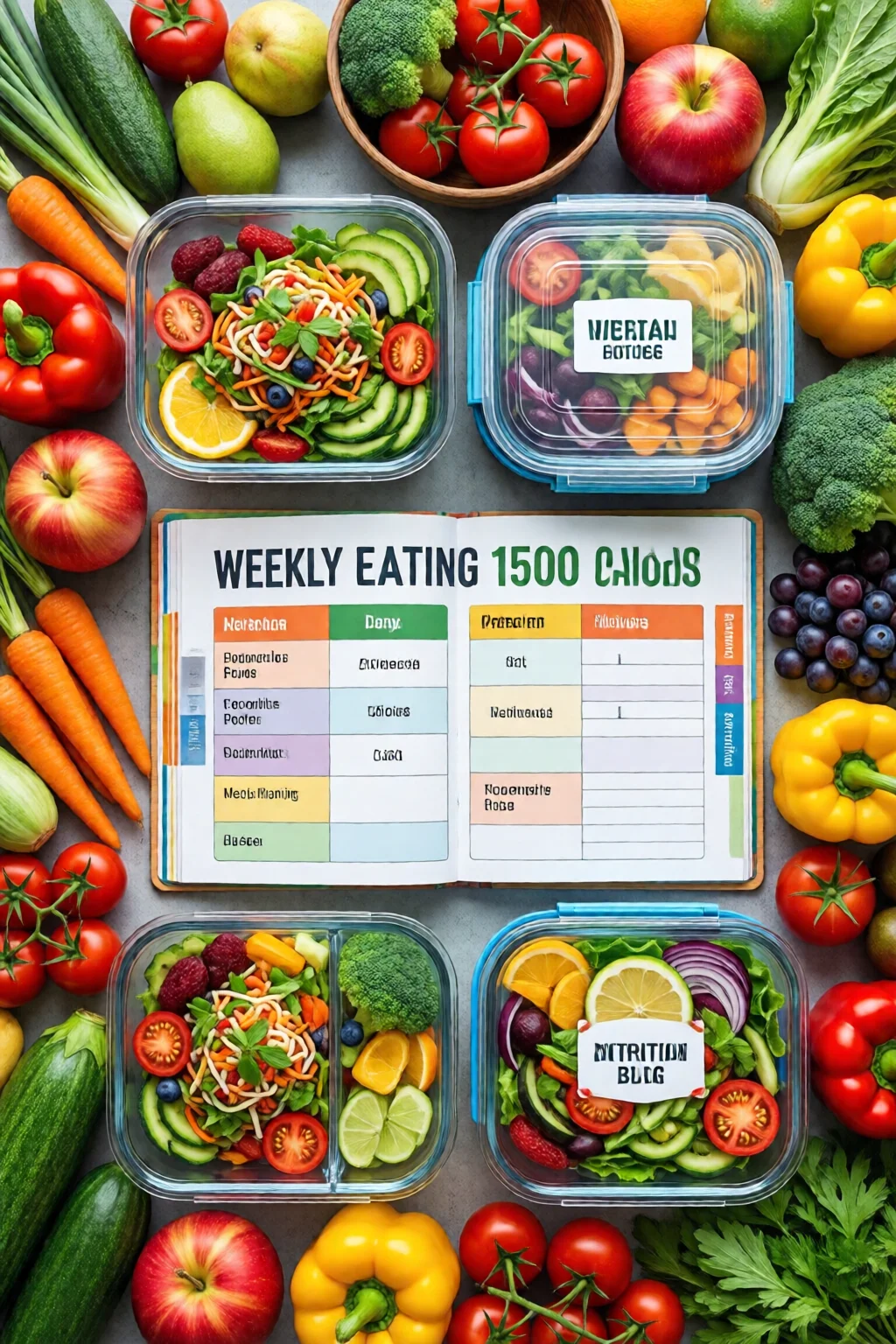
Here’s a sample day that hits 30 % protein, 30 % fat, 40 % carbs—roughly 112 g protein, 50 g fat, 150 g carbs. All foods are readily available in U.S. supermarkets.
- Breakfast (350 cal): 3 egg whites + 1 whole egg scrambled with spinach, ½ cup oatmeal with ½ cup blueberries, dash of cinnamon.
- Snack (150 cal): 1 medium apple (≈95 cal) + 10 g almonds (≈55 cal).
- Lunch (400 cal): 120 g grilled chicken breast, 1 cup quinoa, 1 cup roasted broccoli, drizzle of 1 tsp olive oil.
- Afternoon snack (150 cal): Greek yogurt (170 g, plain, 100 cal) + ½ tbsp honey.
- Dinner (450 cal): 150 g baked salmon, ½ cup sweet potato mash, mixed green salad with balsamic vinaigrette.
Adjust portion sizes using a food scale (a 200 g digital scale costs about $19 on Amazon). If you prefer convenience, consider these top‑rated kits that deliver ~1,500 cal per day:
| Meal Service | Price/Week | Calories/Day | Macro Ratio | Rating (out of 5) |
|---|---|---|---|---|
| FitChef 1500‑Cal Meal Kit | $89.99 | 1,500 | 30/30/40 | 4.7 |
| NutriFit “Lean” Plan (Nutrisystem) | $74.95 | 1,500 | 35/25/40 | 4.4 |
| Home‑Cooked “Balanced” Pack (HelloFresh) | $79.00 | 1,500 | 28/32/40 | 4.2 |
Whichever route you choose, hit at least 1.2 g protein per kilogram of body weight and fill half your plate with non‑starchy veg. That keeps you full and supplies micronutrients.
Pros
- Macro‑balanced meals reduce hunger spikes.
- Meal kits simplify grocery trips and portion control.
Cons
- Prepared kits can be pricier than cooking from scratch.
- Limited flexibility for picky eaters.
Remember the ferrero rocher calories example: a single truffle packs ~73 cal. A quick “cheat” can push you over 1,500 if you’re not careful.
5. Monitoring, Tweaking, and Knowing When to Stop
Even with perfect math, your body will tell you if 1,500 cal is sustainable. Use these checkpoints:
- Weekly weigh‑in: Aim for ≤1 lb loss per week after the first two weeks. Faster loss may signal too low intake.
- Strength logs: If you’re lifting, track reps and sets. A drop of >5 % in performance means you need more fuel.
- Energy questionnaire: Rate energy 1–10 each morning. Consistently <4 warrants a 100‑cal bump.
- Blood work: Check ferritin, vitamin D, and thyroid panel every 8‑12 weeks if you stay under 1,600 cal for >3 months.
When you hit your target weight, transition to a “maintenance” phase: increase calories by 200‑300 cal and monitor weight for two weeks. Then settle at a level where you neither gain nor lose (usually TDEE + 10 %).
Pros
- Data‑driven adjustments prevent plateaus.
- Helps preserve muscle mass.
Cons
- Requires consistent tracking (time commitment).
- May need professional guidance for lab work.
One habit I love: pairing the diet with the hollow hold exercise complete guide 2026 2. Core strength improves, and you burn a few extra calories without over‑training.
Final Verdict: Is Eating 1500 Calories a Day Healthy?
Short answer: Yes, for many adults, a 1,500‑calorie diet can be a healthy, sustainable way to lose weight—provided it’s personalized, nutritionally balanced, and monitored. The key is aligning the 1,500 cal target with your actual TDEE, ensuring adequate protein, micronutrients, and listening to your body’s signals. If you fall outside the safe range, consider a higher calorie target or consult a registered dietitian.
Bottom line: Treat the 1,500‑calorie figure as a flexible tool, not a rigid rule. Adapt, track, and adjust, and you’ll keep the scale moving without sacrificing health.
Can I stay on 1500 calories forever?
No. Long‑term maintenance requires eating at or slightly above your total daily energy expenditure to keep weight stable and support metabolic health.
What’s the minimum protein I need on a 1500‑cal diet?
Aim for at least 1.2 g per kilogram of body weight (≈0.55 g per pound). For a 70 kg (154 lb) person, that’s ~84 g protein daily.
How quickly can I expect to see results?
Typically 0.5‑1 lb per week. Initial water loss may make the first week look bigger, but steady fat loss follows.
Do I need supplements on a 1500‑cal plan?
A multivitamin covering vitamin D, calcium, iron, and omega‑3s can help fill gaps, especially if you’re not eating a wide variety of foods.
1 thought on “Is Eating 1500 Calories A Day Healthy – Everything You Need to Know”